Which bird is singing there?
Tap Start and Hearbird tells you, right away, on your phone. 800 species of Europe, North Africa and the Middle East, recognised by their song and calls.
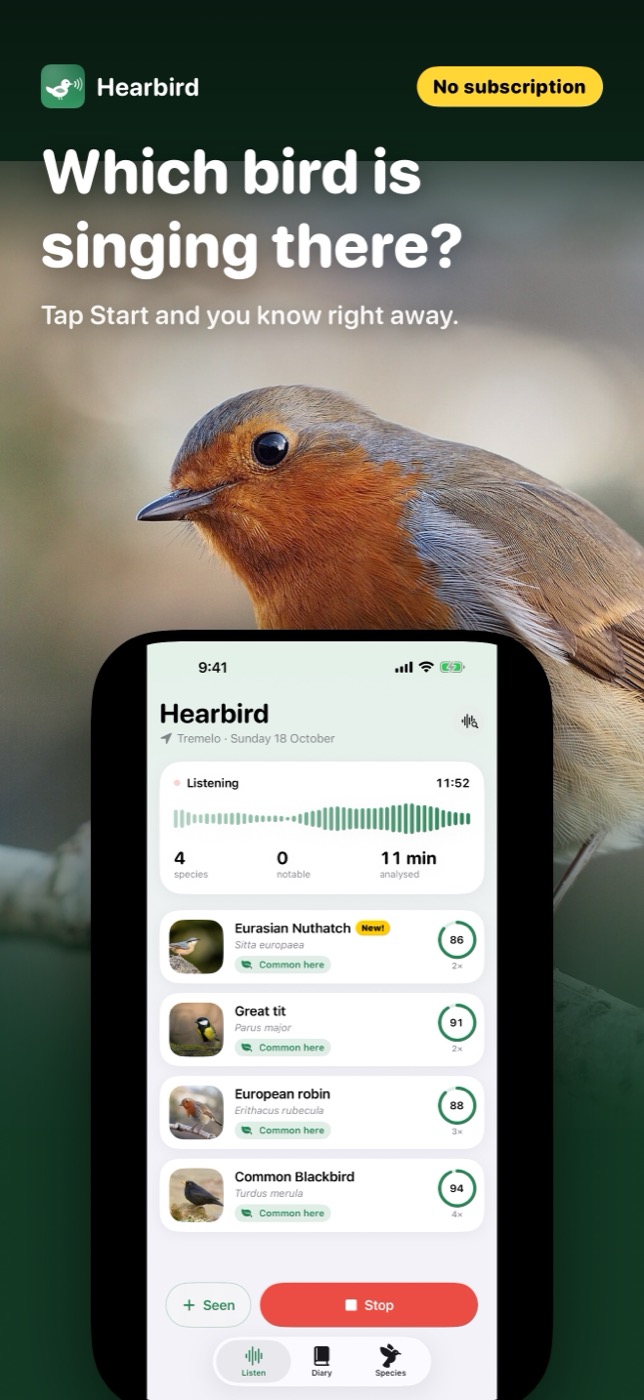
No region packs to download, no lists to manage, no account to create. Press Start and listen.
The microphone opens and Hearbird listens. Every few seconds it runs what it hears through a bird-sound model, on the phone itself. It keeps working with the screen off and the phone in your pocket.
As soon as a species sings, its card slides in: a photo, its name, and a live confidence ring. A bird you hear again lights up instead of appearing twice. Saw one that kept quiet? Add it with one tap.
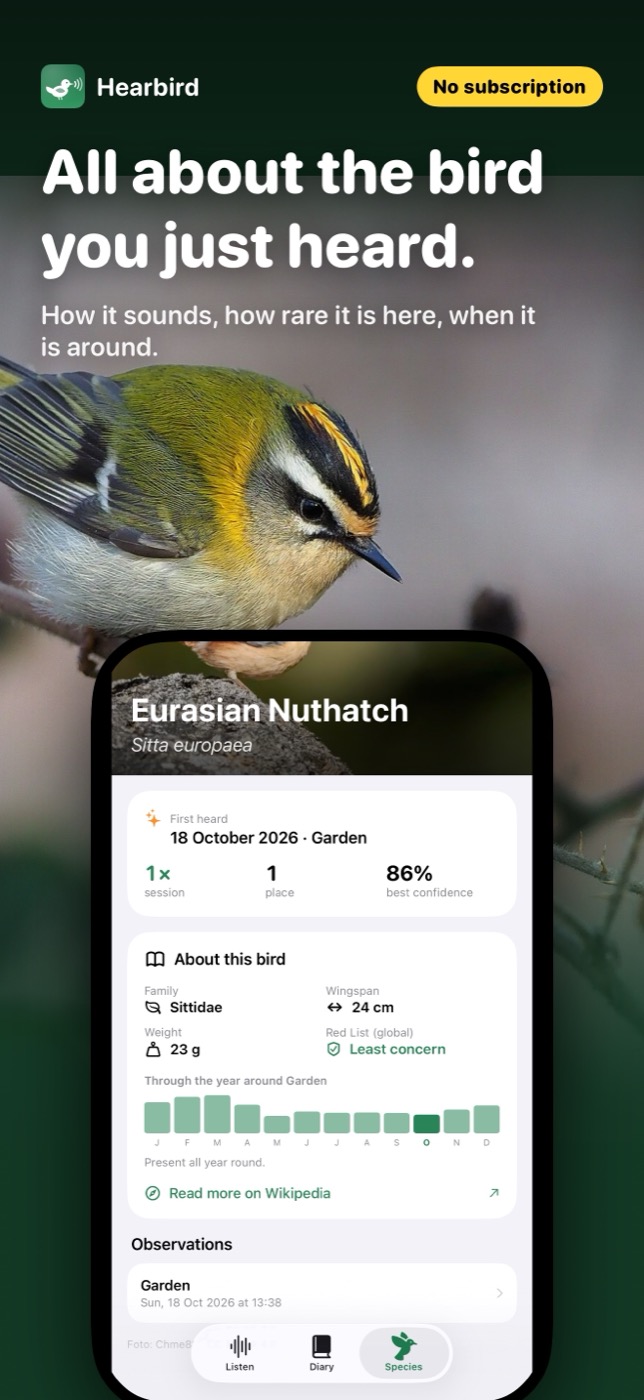
Each card says whether that bird is common, scarce or rare where you are, and whether it is unusual for the time of year. A first-ever species gets a "New!" badge. Tap it for everything about the bird.
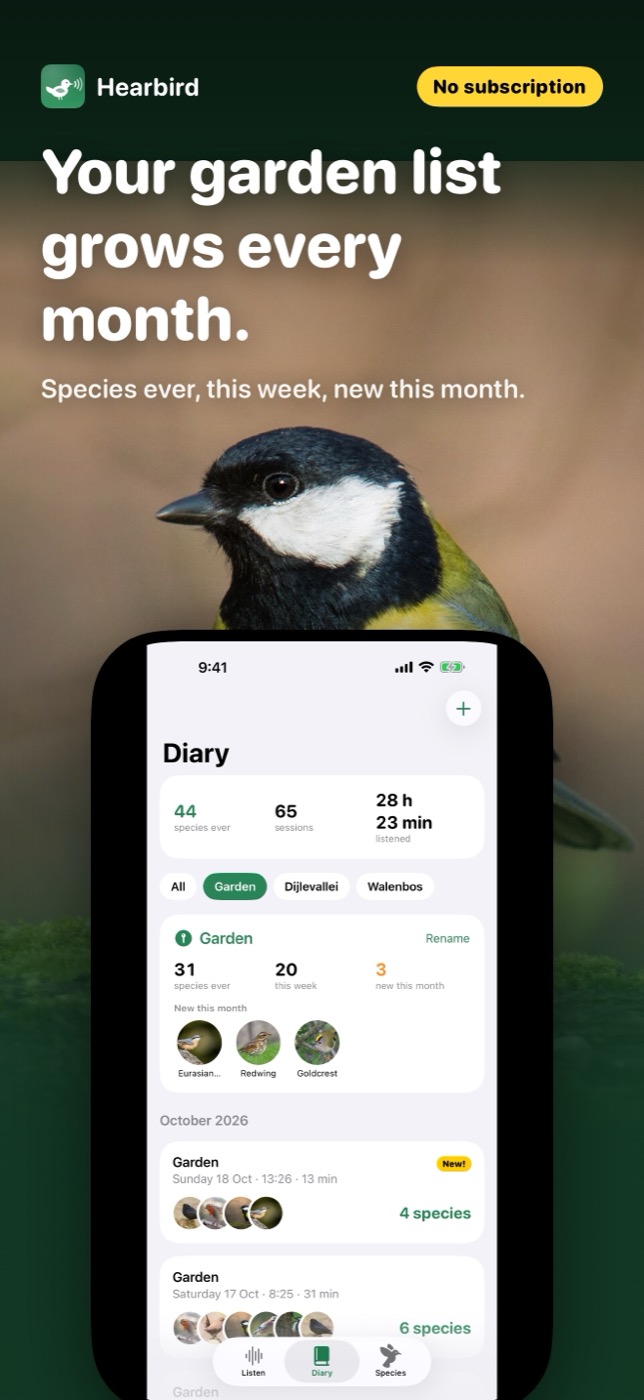
Where you were, how long you listened, which birds you heard, and the best clip of each to listen back to. Places you return to are grouped, so you can watch your garden list grow month after month.
Recognition runs on the phone with a model built into the app. Your recordings and your diary never leave your phone.
Perch 2.0 by Google Research, an open bird-vocalisation model (Apache 2.0), sliced to the species of the Western Palearctic and converted to run on the phone itself: the Neural Engine on iPhone, ONNX Runtime on Android.
EOD – eBird Observation Dataset, Cornell Lab of Ornithology, via GBIF.org (CC BY 4.0): how often each species is reported per area and per month.
Species photos from Wikimedia Commons under CC0, CC BY and CC BY-SA, credited on every species page. Names, families and Wikipedia links from Wikidata (CC0), in twelve languages.
Hearbird is made by Monto bleu in Belgium. Questions: [email protected].
 Hearbird